


2027 Solar Cable Trends: The Future of Reinforced Solar Cable
Over the past decade, solar modules, inverters, energy storage systems, and smart O&M technologies have continued to advance. Module efficiency has steadily improved, inverter efficiency has reached new levels, energy storage systems have become increasingly intelligent, and AI is now being integrated into the design, construction, and operation of solar power plants.
However, as the entire solar value chain continues to evolve, one question remains:
Does the Solar Cable industry also need to evolve?
As global solar projects continue to grow in scale and copper prices remain under pressure, traditional cable solutions that rely heavily on copper consumption are facing increasing cost challenges.
For EPC contractors, solar project developers, procurement teams, and cable distributors, the key question is no longer simply “How much does the cable cost per meter?”
Instead, it is:
How can solar projects reduce overall cable costs while maintaining safety, reliability, and long-term performance?
This is driving the development of a new generation of reinforced Solar Cables.
Rising Copper Costs Are Challenging Traditional “Copper-Heavy” Solar Cable Solutions
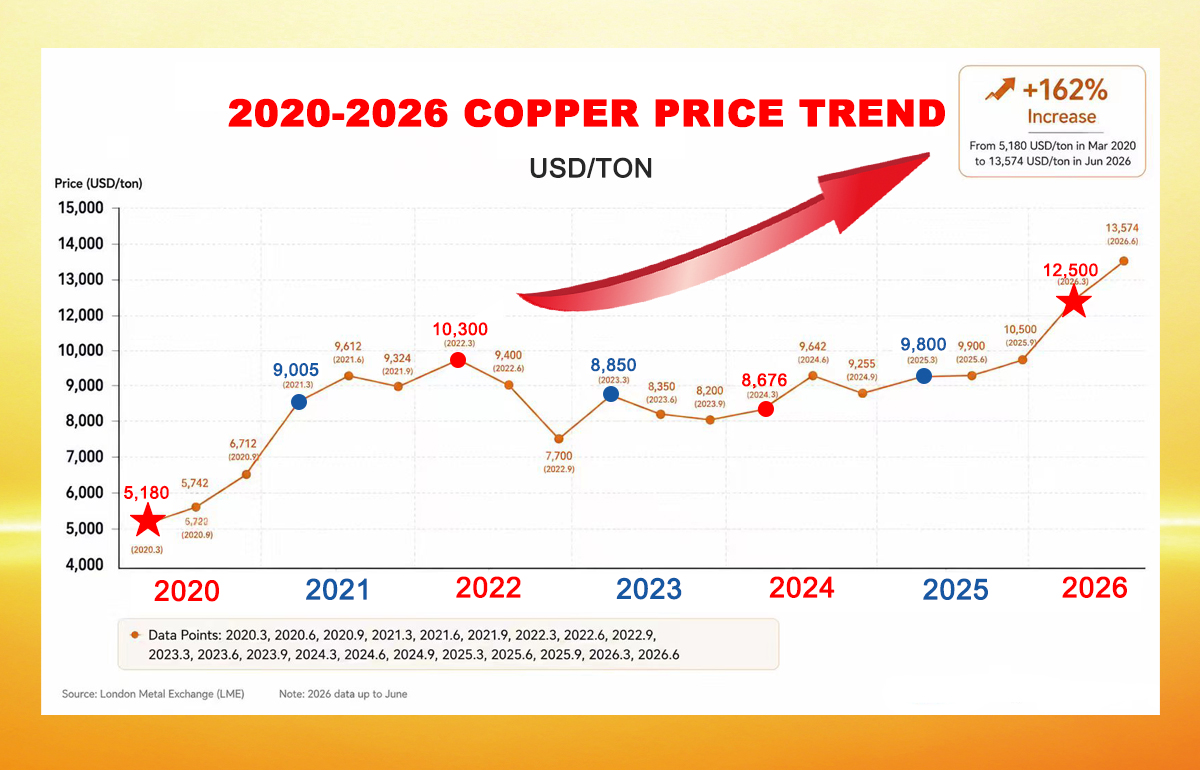
Copper is one of the most important raw materials used in solar cables and is also a major factor influencing Solar Cable costs.
In recent years, demand for copper has continued to grow due to the rapid development of electric vehicles, energy storage systems, data centers, electrification infrastructure, and other industries. At the same time, new copper mining projects typically require long development cycles, creating additional uncertainty in global copper supply and pricing.
For large-scale solar projects, these changes can have a particularly significant impact.
In the past, many solar projects were relatively small, meaning cable costs represented a limited portion of the overall project budget. Today, however, the continued expansion of utility-scale solar farms, commercial and industrial PV projects, and large solar power plants means that a single project may require hundreds of thousands of meters of Pv Cable.
When the cost of each meter increases by only a few cents, the impact can become substantial when multiplied across hundreds of thousands or even millions of meters.
This is why the traditional approach of simply adding more copper to improve cable performance is facing new challenges in a high-copper-price environment.
The industry needs a better solution—not simply using less copper, but:
reducing unnecessary copper consumption while maintaining reliable solar cable performance.
Solar Cable Selection Is No Longer Just About Purchase Price
In the past, many buyers primarily compared the price per meter when purchasing Solar Cable.
For large-scale solar projects, however, the purchase price is only one part of the decision.
A reliable PV Cable must maintain stable performance throughout years of outdoor operation. Unlike standard indoor electrical cables, solar cables are exposed to demanding environmental conditions, including:
- Strong UV radiation
- High and low temperatures
- Repeated temperature fluctuations
- Wind and sand
- Heavy rain and humidity
- Salt spray and corrosion
- Long-term mechanical abrasion
- Continuous electrical loading
Therefore, evaluating a PV Cable should not be limited to its initial purchase price.
If a cable experiences insulation aging, sheath damage, conductor overheating, or increased electrical losses during long-term operation, it can lead to:
downtime, maintenance costs, rework, replacement costs, labor expenses, and potential energy losses.
For EPC contractors and project owners, the real consideration should be:
Lower purchase cost + reliable performance + long-term durability = Lower lifecycle cost.
Why Can 4mm² Solar Cables Have Such Different Prices?
During procurement, buyers often ask:
Why can Solar Cables with the same 4mm² specification have significantly different prices?
There are many factors behind price differences, including raw material costs, manufacturing processes, certification requirements, production management, and cable construction.
Therefore, when sourcing PV Cable, buyers should look beyond the product label and quotation and pay attention to several key factors.
1. Conductor Structure
Conductor cross-sectional area, conductor design, copper quality, and manufacturing processes can all affect cable resistance and electrical performance.
2. Insulation Material
Solar cables operate outdoors for extended periods and therefore require good resistance to heat, weathering, UV radiation, and electrical stress.
3. Sheath Performance
The outer sheath is directly exposed to the environment and must withstand UV radiation, mechanical abrasion, wind, sand, moisture, and other outdoor conditions.
4. Product Certifications
For international projects and large-scale solar installations, international certifications and relevant test reports are important factors in cable selection.
5. Long-Term Operating Cost
A lower purchase price does not necessarily mean a lower total project cost.
If a cable creates higher energy losses, maintenance requirements, or replacement costs during operation, its actual lifecycle cost may be significantly higher.
Therefore, a truly cost-effective Solar Cable is not simply the cheapest product. It is a product that provides a better balance between cost, performance, and long-term reliability.
No Excessive Copper. No Quality Reduction. A New Approach to Solar Cable Technology
When facing rising copper costs, traditional solutions generally follow two directions.
The first is to continue increasing copper content.
This can provide good electrical conductivity, but as copper prices rise, cable costs increase accordingly.
The second is to reduce materials to lower the product price.
While this may reduce the initial purchase cost, compromising product performance or long-term reliability can increase project risks later.
True technological innovation should not force the industry to choose between high cost and low quality.
The future competitiveness of Solar Cable will not depend on who uses the most copper, but on who can maximize the value of every gram of copper.
Through conductor optimization, upgraded insulation materials, reinforced sheath structures, and improved cable design, manufacturers can achieve more efficient material utilization while meeting applicable performance and safety requirements.
This is the core philosophy behind VAZPO’s reinforced solar cable development.
VAZPO Reinforced Solar Cable: Rethinking Solar Cable Performance and Cost
VAZPO began its dedicated reinforced solar cable R&D program in 2023.
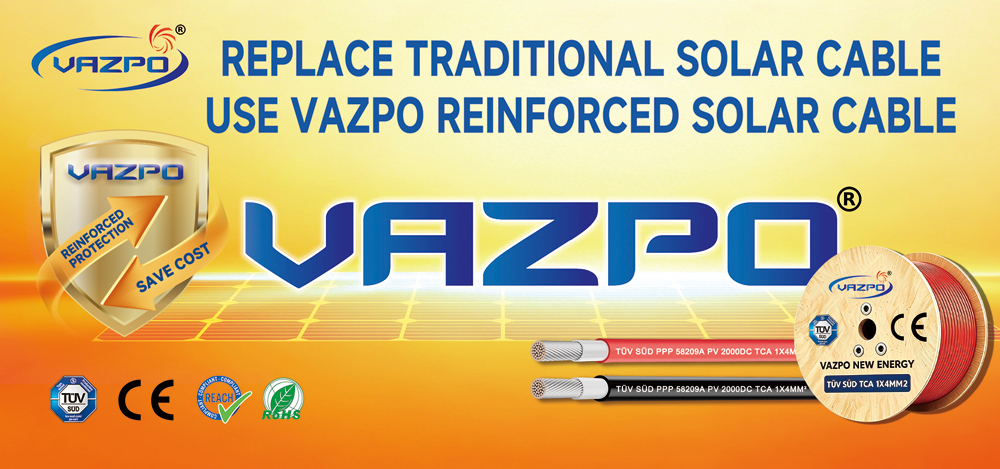
To address the cost, protection, and long-term performance challenges of traditional PV Cable, VAZPO has optimized the conductor, insulation, sheath, and overall mechanical structure to develop a new generation of Reinforced Solar Cable.
The goal is not simply to reduce copper consumption.
Instead, the focus is on:
optimizing material utilization while strengthening the overall cable structure and outdoor protection.
This approach aims to achieve a better balance between cost efficiency, electrical performance, durability, and long-term reliability.
Four-Level Reinforced Protection for Long-Term Outdoor Performance
Solar cables operate in demanding environments, and conductor performance alone cannot provide complete protection.
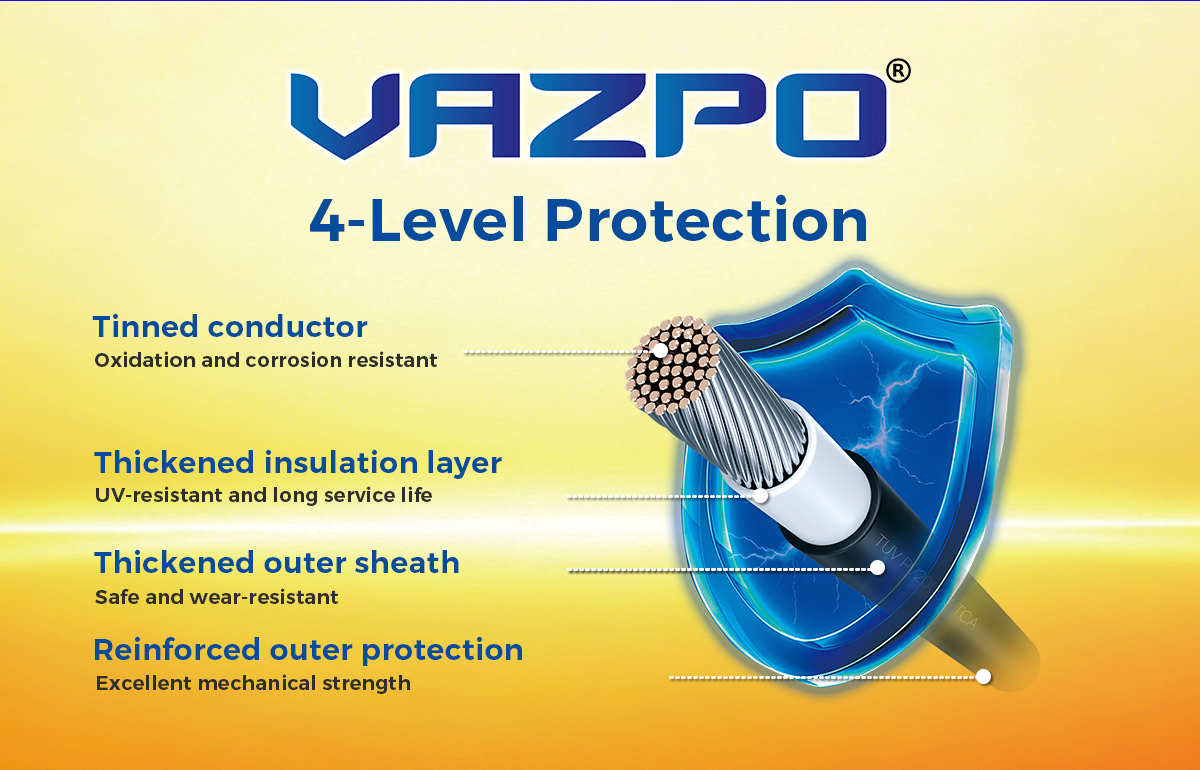
VAZPO Reinforced Solar Cable incorporates a four-level protection structure designed to strengthen the cable from the conductor to the outer sheath.
Level 1: Tinned Copper-Based Conductor
The tinned copper-based conductor helps improve resistance to oxidation and corrosion, making it suitable for long-term outdoor applications.
Level 2: Reinforced Insulation Layer
An optimized insulation structure and increased insulation thickness help strengthen electrical insulation protection and reduce potential risks during long-term outdoor operation.
Level 3: Reinforced Outer Sheath
The reinforced sheath structure improves resistance to abrasion, tearing, and weathering, helping the cable withstand long-term exposure to UV radiation, wind, sand, and other outdoor conditions.
Level 4: Overall Structural Reinforcement
The overall cable structure is optimized to improve mechanical protection and durability, making the cable suitable for utility-scale solar farms, commercial and industrial PV projects, and demanding outdoor installation environments.
For long-term Solar PV Systems, a more comprehensive protection structure can help increase the overall service value of the cable.
Reduced Copper Consumption Without Compromising Reliable Electrical Performance
One of the most important questions buyers ask is:
Will reducing copper consumption affect the electrical performance of a solar cable?
VAZPO’s approach is not simply to “reduce copper,” but to optimize the conductor structure and improve copper utilization efficiency.
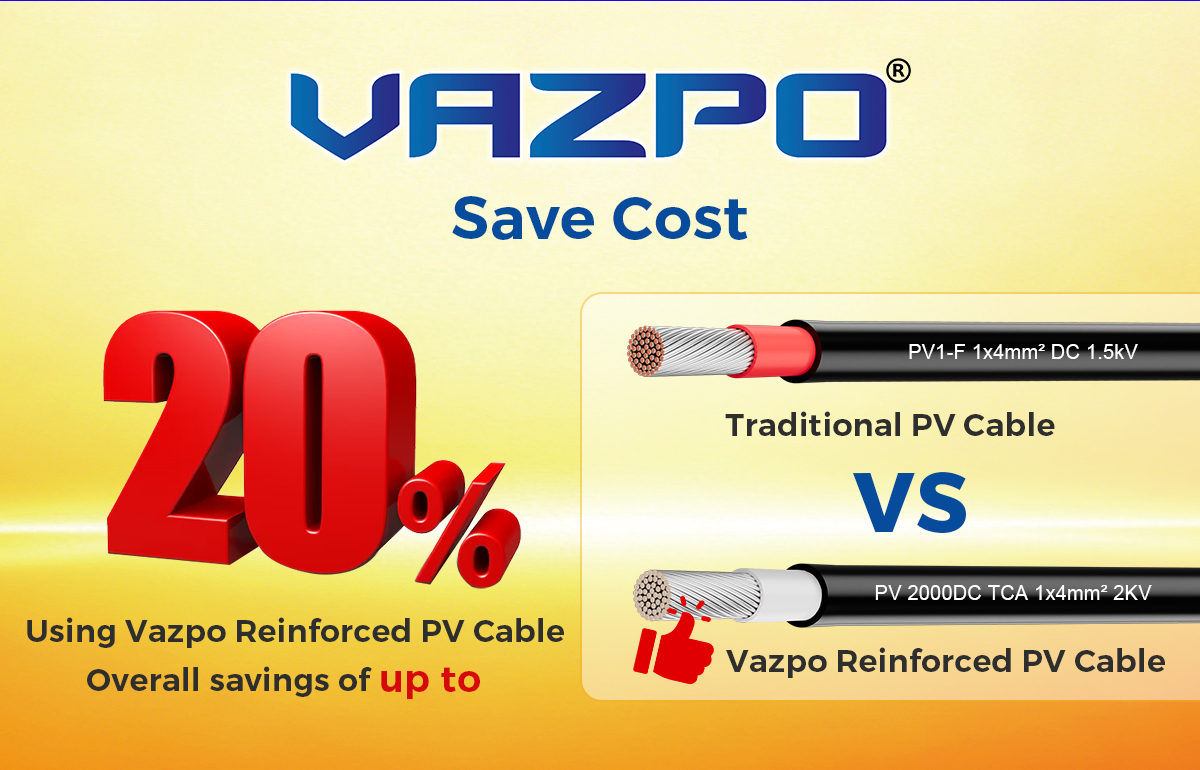
For example, a conventional 4mm² solar cable may have a resistance of approximately 5.09 Ω/km, while VAZPO’s optimized product can achieve approximately 4.98–5.01 Ω/km.
For 6mm² products, resistance can reach approximately 3.28 Ω/km.
Actual resistance values may vary depending on the specific product design, applicable standards, manufacturing process, and testing conditions. Project selection should always be based on the corresponding product specifications and test reports.
Through optimized structural design, VAZPO aims to provide:
More efficient material utilization + stable electrical performance + more competitive procurement costs.
This can be particularly valuable for large-scale PV projects requiring substantial quantities of Solar Cable.
International Certifications and Testing for Greater Product Transparency
For large EPC projects, overseas solar installations, and global distribution channels, product certification is an important part of supplier evaluation.
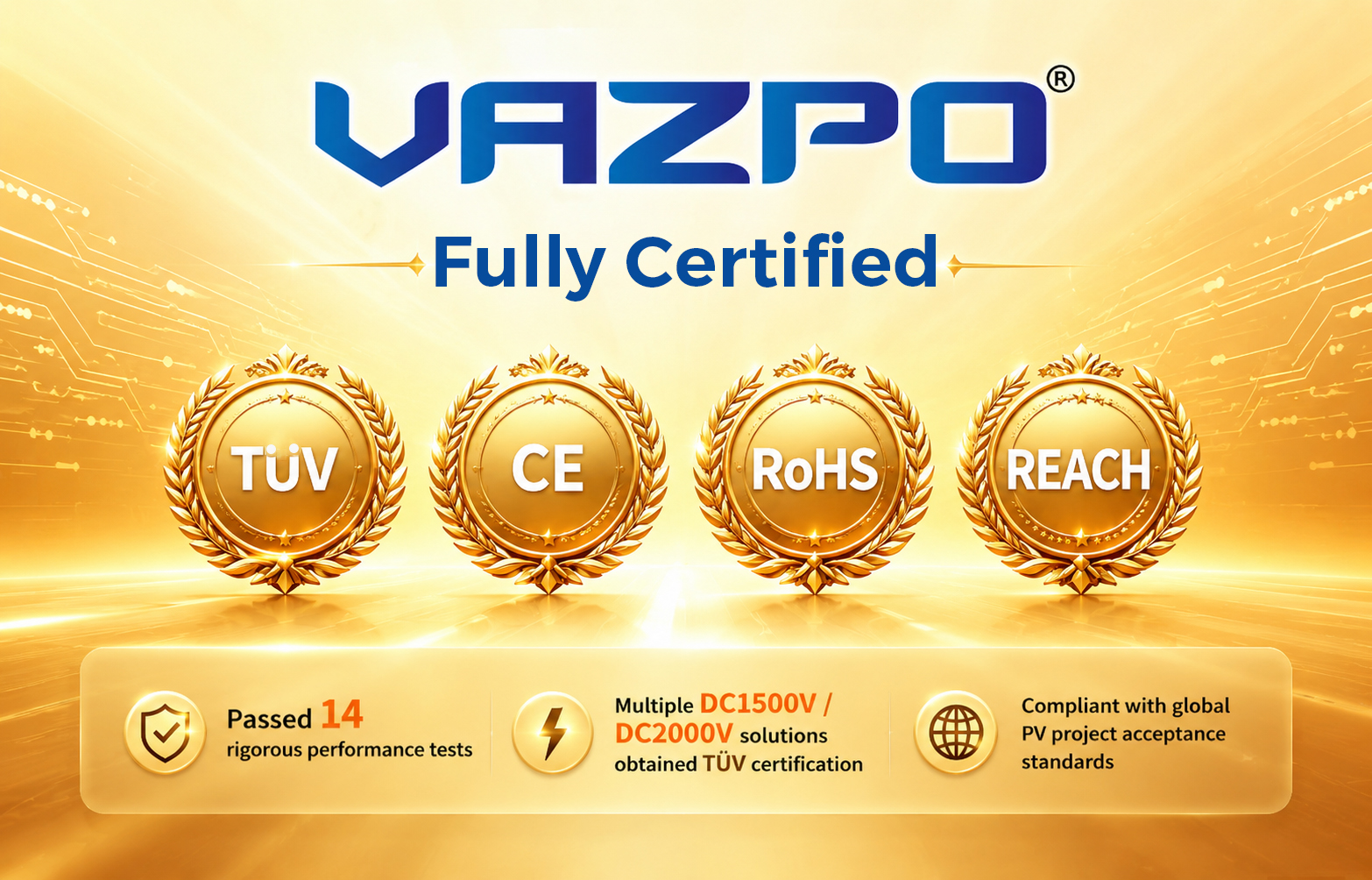
VAZPO reinforced solar cable products cover multiple international certifications and environmental standards, including:
TÜV, CE, RoHS, and REACH.
Selected DC2000V product solutions are available with 35%, 60%, and 70% copper-content options, while DC1500V product solutions are also available in corresponding configurations.
Certification scope, specifications, and testing requirements vary by product. Customers should refer to the applicable certification documents and technical data for specific products.
Third-party certifications and testing provide EPC contractors, procurement teams, distributors, and project developers with greater transparency when evaluating whether a cable meets their target market and project requirements.
70MW Czech Solar Project: Real-World Validation of Cost Savings
Ultimately, product technology needs to be validated through real-world applications.
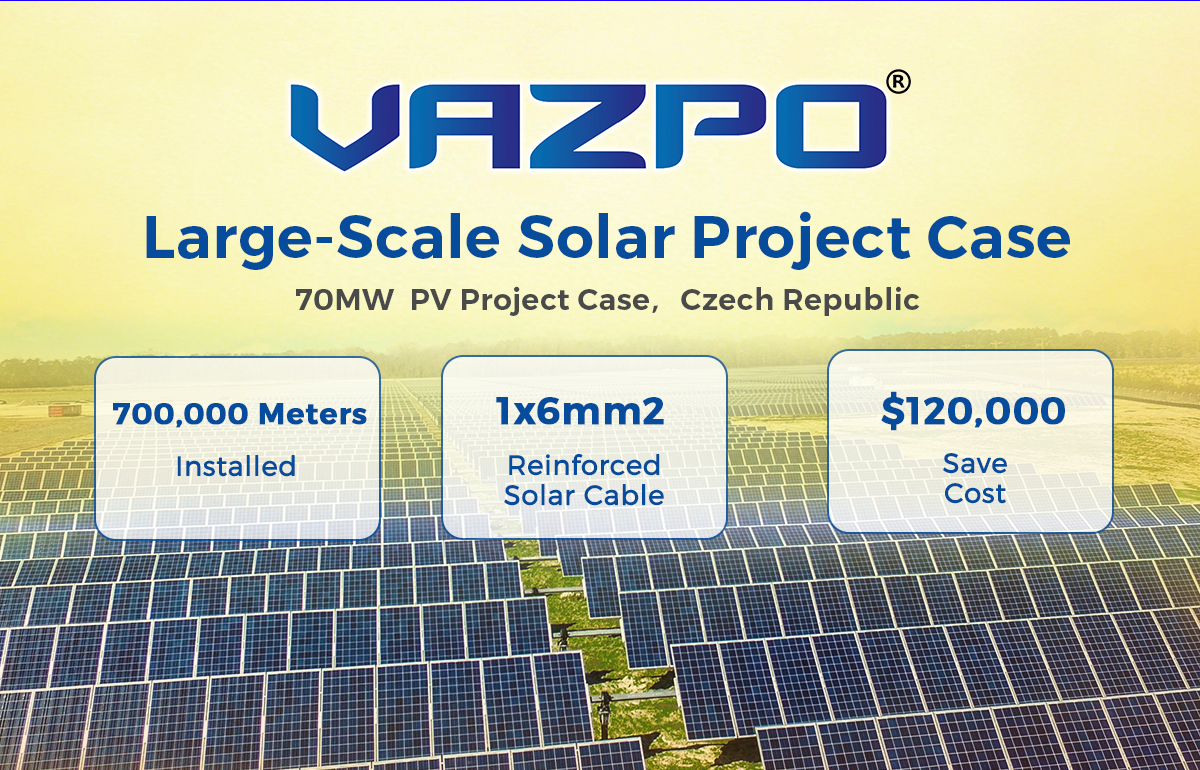
VAZPO reinforced solar cables have been successfully applied in a 70MW utility-scale solar project in the Czech Republic.
The project used approximately 700,000 meters of 1×6mm² VAZPO reinforced solar cable.
Based on the project calculation, the cable achieved approximately USD 0.17 in cost savings per meter, resulting in total project savings of more than USD 120,000.
This case demonstrates how even a relatively small optimization in per-meter cable cost can create significant overall savings when hundreds of thousands of meters of cable are required.
For EPC contractors, this can help control project material costs.
For project developers, it can contribute to improved project economics.
For solar cable distributors, it can provide a more competitive product while maintaining a sustainable profit margin.
From Price Competition to Lifecycle Value Competition
The future solar cable market will not be determined simply by who offers the lowest quotation.
For large-scale Solar Projects, buyers increasingly need to consider:
Purchase cost, electrical performance, mechanical protection, environmental resistance, certifications, delivery capability, and long-term operating costs.
This means Solar Cable is gradually evolving from a basic supporting component into an important product that can influence the overall economics of a solar project.
As global solar installations continue to expand and project sizes become larger, improving material efficiency and product reliability through technological innovation will become increasingly important for Solar Cable manufacturers and suppliers.
VAZPO: High-Value Solar Cable Solutions for Global PV Projects
In addition to product development, reliable manufacturing and delivery capabilities are essential for long-term cooperation.
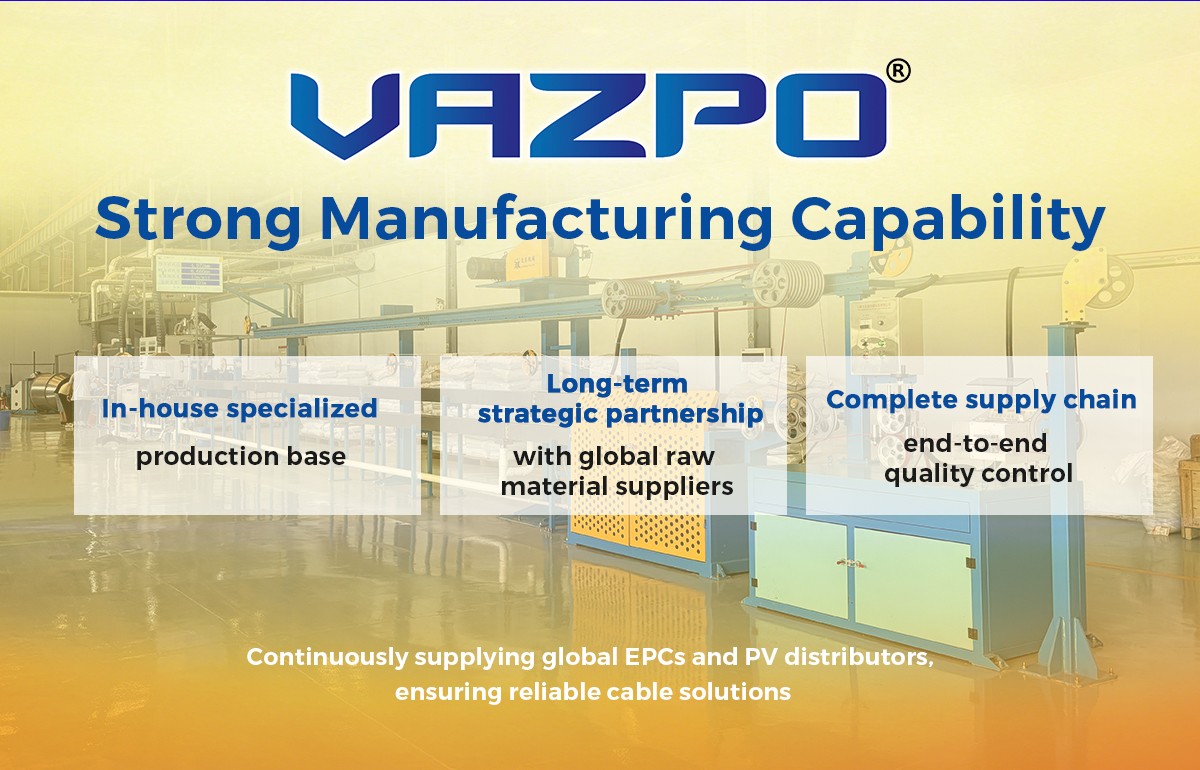
VAZPO operates a professional manufacturing facility with an integrated production and quality control process covering raw material selection, conductor processing, insulation extrusion, sheath production, irradiation processing, product testing, and final shipment.
Through standardized manufacturing and multi-stage quality inspections, VAZPO works to maintain consistent specifications and performance across production batches.
VAZPO Solar Cable solutions can be used in:
- Residential Solar Systems
- Commercial & Industrial PV Projects
- Utility-Scale Solar Farms
- Solar Power Plants
- Energy Storage Systems
- PV Distribution Projects
For different project requirements, including voltage ratings, cable sizes, copper-content options, operating environments, and certification requirements, VAZPO can provide corresponding cable solutions based on customer needs.
The Next Decade of Solar Cable Will Belong to Technological Innovation
The solar industry is continuously evolving.
Solar module efficiency is improving. Inverter efficiency continues to advance. Energy storage systems are becoming smarter. Solar power plant design and O&M are becoming increasingly digitalized.
Solar cables need to evolve as well.
The next generation of Solar Cable should not rely simply on increasing copper content to achieve performance, nor should it reduce product quality in pursuit of lower prices.
True long-term competitiveness will come from material optimization, structural innovation, reinforced protection, and advanced manufacturing technologies that create a better balance between cost and performance.
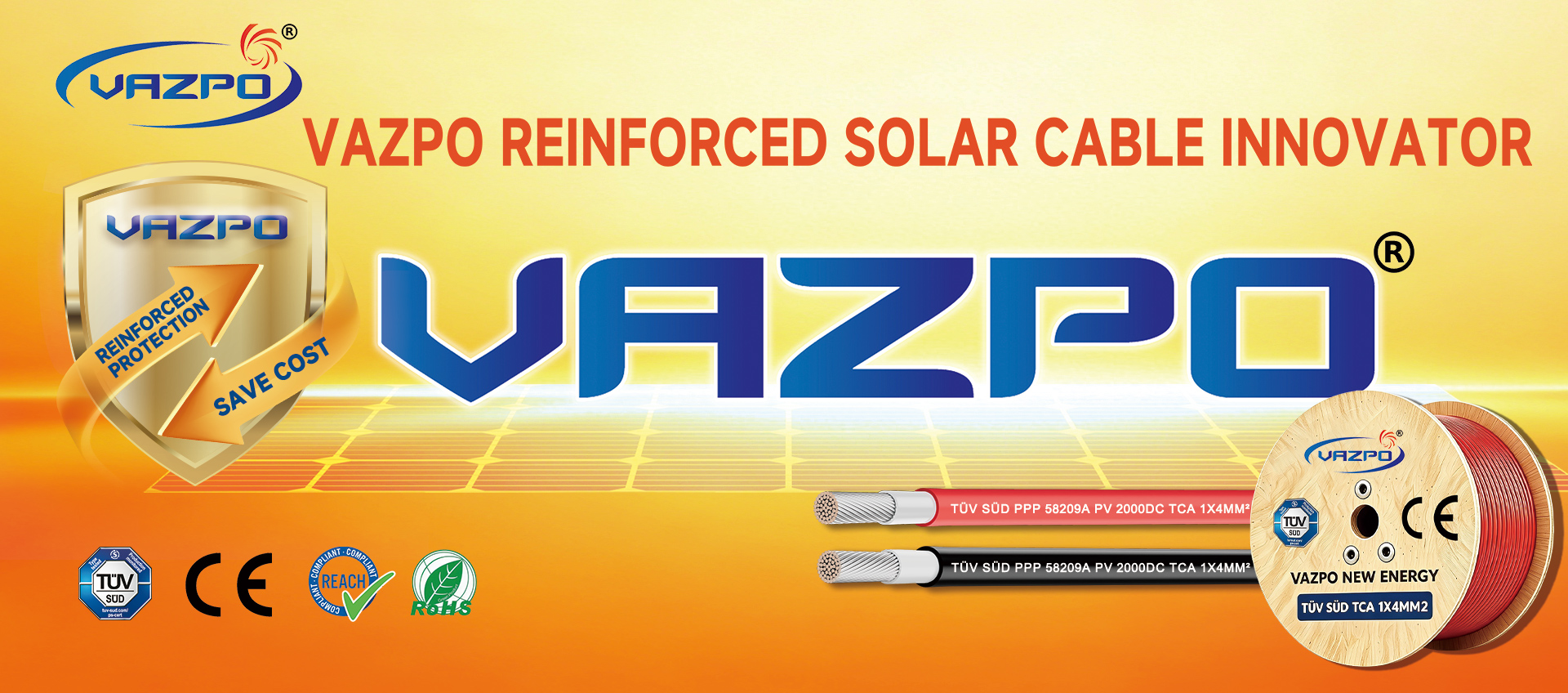
VAZPO Reinforced Solar Cable uses technology to maximize material value and reinforced structural design to improve cable protection, delivering more competitive cable solutions for solar projects worldwide.
Replace Traditional Solar Cable, Use VAZPO Reinforced Solar Cable.
VAZPO — Reinforced Solar Cable Innovator.
If you are looking for Reinforced Solar Cable, or customized PV Cable solutions, contact VAZPO for product specifications, certification documents, sample testing, and bulk quotations.